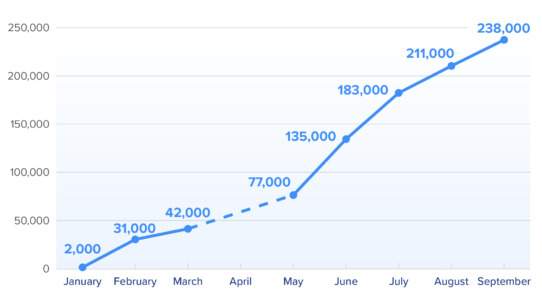

Update: In September, the Medicaid backlog grew to 238,000, and the SNAP backlog grew to 175,000. The data from August and September is available here.
Thousands of Texas families are waiting longer for health coverage.
Texas families depend on Medicaid health insurance for timely access to health care. Medicaid covers nearly half of all births in Texas and provides health coverage for millions of children, pregnant women, seniors, and Texans with disabilities. When someone loses a job, has a baby, or experiences another life change, they often need Medicaid coverage quickly to access doctor visits, prescriptions, prenatal care, and other essential health services. We recently met with Texas families who described how important Medicaid was for their health.
Unfortunately, new data from the Texas Health and Human Services Commission (HHSC) show that the state’s Medicaid eligibility system is falling further behind. Over the past several months, the number of Medicaid applications awaiting assignment to an eligibility worker has increased dramatically, while fewer applications are being processed within federal timeliness standards.
Without action by state leaders, these delays will continue, leaving eligible Texans waiting weeks — or even months — for the health coverage they qualify for.
Medicaid application backlog has grown dramatically.
HHSC’s monthly operational data show a sharp increase in the number of Medicaid applications sitting in the agency’s queue before an eligibility worker has even begun processing them. The backlog grew from 2,000 applications in January to 183,000 in July.
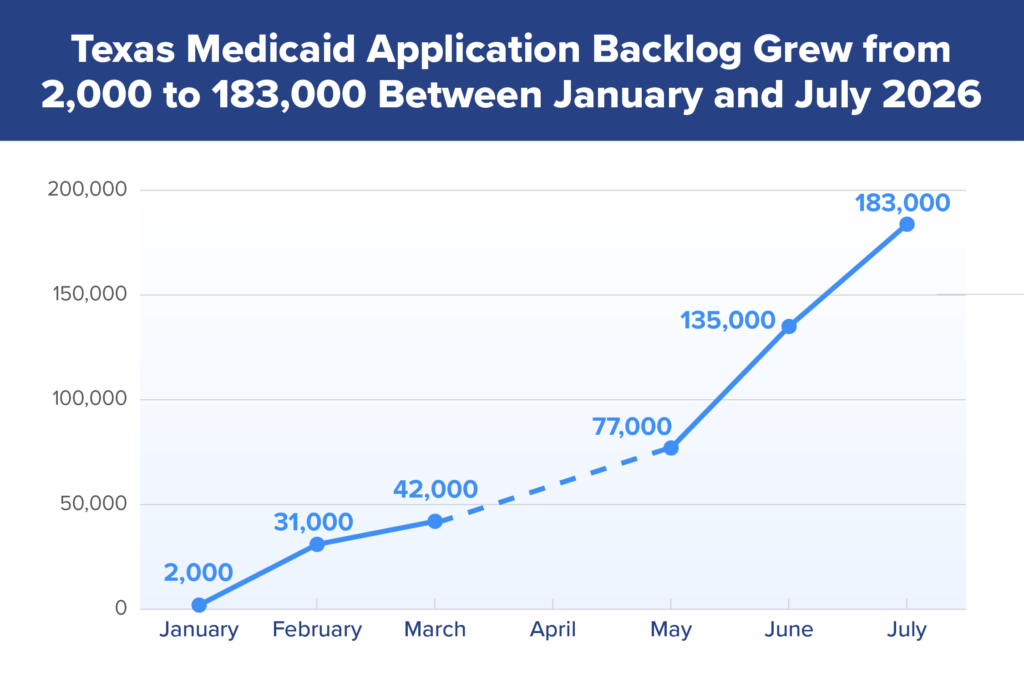
Data provided by HHSC. Data not available for April 2026.
At the same time, HHSC’s performance on federal timeliness standards has declined substantially.
Federal rules require Medicaid eligibility determinations to be completed within 45 days for most applicants. Unfortunately, while the state completed 92% of applications on time in January, by July it was completing only 65% of applications within federal standards. Recent HHSC operational data indicate that half of applications are now waiting approximately 70 days or more before an eligibility worker even begins processing the case, making timely determinations increasingly difficult.
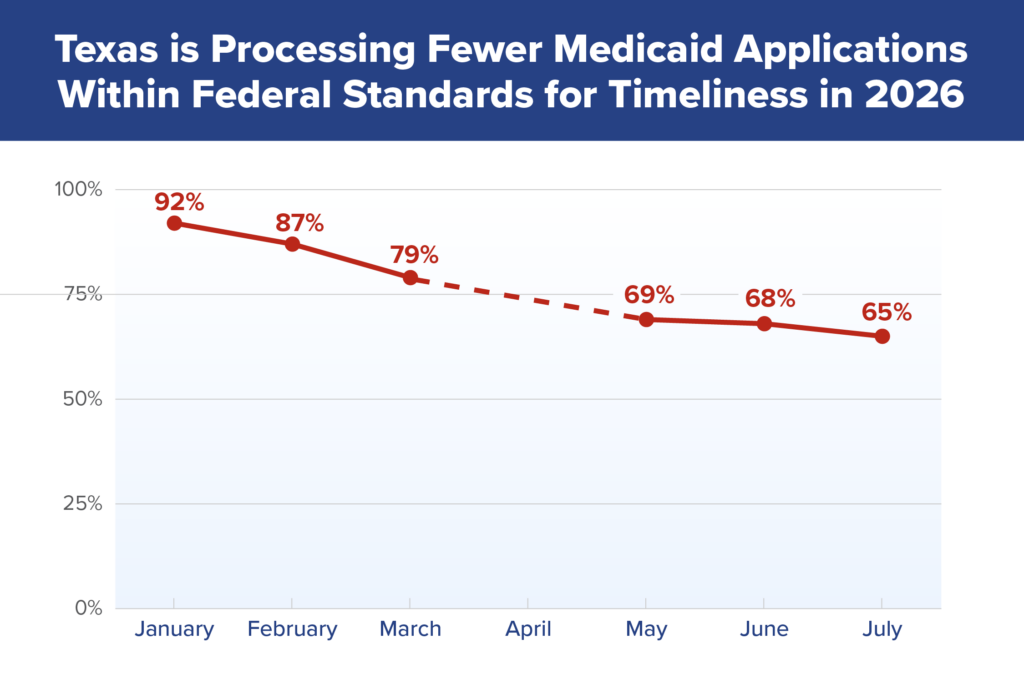
Data provided by HHSC. Data not available for April 2026.
Delays are also skyrocketing in SNAP.
SNAP application backlogs have also grown significantly, suggesting broader strain on the state’s eligibility system. The number of uninitiated SNAP applications in the queue rose steadily from 4,000 in January to 126,000 in July.
Delays have real consequences for Texas families.
These numbers represent more than administrative statistics — they represent families waiting for health care and food.
Families waiting for SNAP benefits experience real hardship as food costs continue to strain household budgets. When applications sit in a queue for weeks, families may have to rely on food banks, skip meals, purchase less nutritious foods, or make difficult tradeoffs between groceries and other essentials like rent, transportation, or medication. Delays in processing benefits can deepen financial stress at a time when families are already seeking help to meet basic needs.
When Medicaid applications sit untouched for weeks, eligible Texans may delay prenatal care, postpone appointments for their children, go without medications, or struggle to access behavioral health services while they wait for coverage to begin.
For many families, Medicaid is not optional. It is the pathway to receiving necessary health care during pregnancy, early childhood, and other critical periods. Delays in determining eligibility can leave families uncertain about whether they can afford needed care and create unnecessary stress during already difficult circumstances.
Texas needs a short-term plan while long-term improvements are underway.
Texas has recognized that its aging eligibility technology needs modernization and has already begun investing in a replacement system. Last year, the Legislature made a significant investment in Texas’ eligibility infrastructure to help modernize the system and improve how Texans apply for and maintain benefits. Those improvements are important but will take several years to fully implement.
Families cannot afford to wait years for relief from the enrollment system’s longstanding challenges or the spike in delays that we’ve seen this year.
The recent surge in the backlog appears to be driven by HHSC taking on significant new demands related to SNAP. Federal changes enacted through HR 1 (the big budget bill Congress passed last year) require Texas to implement new SNAP work requirements, which have required substantial changes to the state’s eligibility technology and new training for roughly 6,000 eligibility workers. These additional technology and workforce demands are occurring within an eligibility system that was already struggling to keep up with applications, contributing to mounting backlogs across both Medicaid and SNAP.
State leaders should work with HHSC to identify meaningful short- and medium-term strategies to reduce application delays while the new eligibility system is being built. Potential strategies include:
- Expanding in-person application assistance through community enrollment events and extended service hours, particularly in communities experiencing long wait times.
- Strengthening partnerships with community organizations that help families complete applications and respond to requests for information.
- Identifying operational changes that allow eligibility staff to focus on reducing the growing backlog while maintaining program integrity.
- Continuing investments in technology and process improvements that will permanently improve the efficiency of the eligibility system.
The recent increase in application backlogs demonstrates that the current approach is not sustainable. Eligible Texas families should not wait months simply for their applications to be reviewed.
Reducing these delays should be a priority for HHSC and the Texas Legislature during the interim and the 2027 legislative session.
Texans Care for Children gratefully acknowledges Methodist Healthcare Ministries of South Texas, Inc., for their financial support of this publication. The opinions expressed in this document are those of Texans Care for Children and do not necessarily reflect the views of Methodist Healthcare Ministries.